





UNIFIED AI, AGENTS & DATA

One Interface. Every Agent and System Behind It.

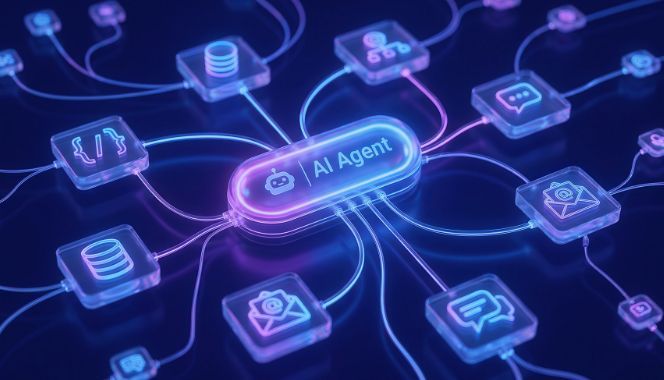
Most enterprises now run AI in several places at once. A single interface brings data, agents, and work surfaces into one governed system, so intelligence acts on complete context and people work from one place.
One Request. Every System Underneath.

One Request. Every System Underneath.

We connect the agents, data, and approvals behind a single conversation, so a complete business process runs from one place. Users see one thread. The work happens across Salesforce and the systems around it, with Salesforce at the core.

Your Rules Travel With the Work

Your Rules Travel With the Work

Moving work into chat does not mean loosening control. Permissions, pricing logic, approval thresholds, and audit trails stay where they live today. The interface changes. The governance does not.

Where Claude, Agentforce, and Your Data Work as One

Salesforce and Anthropic have brought Claude into the Salesforce platform, and Salesforce data and actions into Claude. Claude handles reasoning and language. Salesforce holds the data, the rules, and the governed workflow. OSF Digital builds the layer between them: the business logic agents operate within, the systems a real process depends on, and the handoffs that let multiple agents complete work together.
Unified Data for AI <br> Complete context, not fragments.

Unified Data for AI
Complete context, not fragments.

We connect and govern the data agents reason over across Salesforce and beyond, so every answer and action reflects what is true right now.

Multi-Agent Orchestration <br> Agents that hand off cleanly.

Multi-Agent Orchestration
Agents that hand off cleanly.

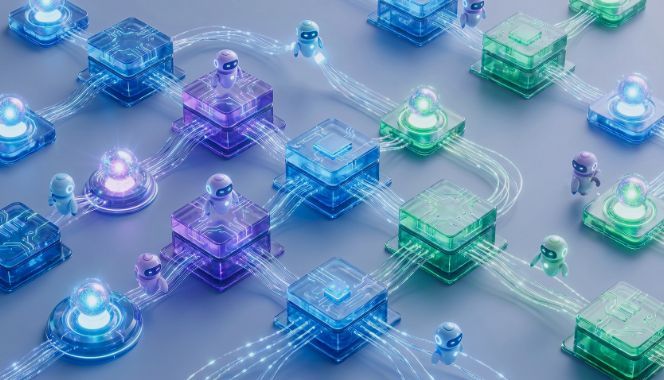
We design the sequence, handoffs, and fallbacks across Agentforce, Claude, and your other agents, so a process completes instead of stalling between steps.

Chat-First Business Processes <br> Work where your teams already are.

Chat-First Business Processes
Work where your teams already are.

Quoting, approvals, service, and operational steps run inside Slack, Claude, or the interface your business already runs on.

Approvals Beyond the CRM <br> Decisions from people who never log in.

Approvals Beyond the CRM
Decisions from people who never log in.

Requests reach finance, legal, partners, and executives by email, text, or their own systems, with every response recorded against the record.

Agent Governance and Guardrails <br> Autonomy with limits you set.

Agent Governance and Guardrails
Autonomy with limits you set.

Eligibility, discount, margin, and escalation rules are defined up front, so agents act within boundaries your business already trusts.

From Demo to Production

Agentic demos are straightforward to build and difficult to operationalize. We focus on what makes them survive contact with real data, real rules, and real users.
Start With the Process That Costs You Most

Start With the Process That Costs You Most

We select processes with a measurable cost of delay, such as quote turnaround or approval cycle time, rather than the process that demonstrates best.

Rules Before Agents

Rules Before Agents

Before an agent touches pricing, eligibility, or approvals, the rules behind those decisions have to be explicit. In most organizations, a significant share of that logic lives in spreadsheets, email threads, and the experience of the people who run the process today. Our advisory teams surface it, document it, and turn it into rules an agent can call, which is often the single largest determinant of whether an agentic process reaches production.

Orchestration Designed at the Seams

Orchestration Designed at the Seams

We map which agent owns which step, where handoffs occur, and what happens when a step fails. Multi-agent processes break at the seams, so we design the seams first.

Agents, Data, and Systems That Work Together

Agents, Data, and Systems That Work Together

Our implementation teams connect Agentforce, Claude, and your existing agents into a single orchestrated flow, grounded in Data 360 and integrated with the systems a process actually depends on. We build the approval paths that reach people outside the CRM, the document generation that closes the loop, and the audit trail that records which rule applied at every step. Every deployment follows repeatable engineering patterns, reducing risk while accelerating time to value.

Accuracy That Holds as Your Business Changes

Accuracy That Holds as Your Business Changes

Products, pricing, and policies change constantly. We monitor the steps most likely to drift and keep agents accurate as the business underneath them evolves.

Governance and Ongoing Stewardship

Governance and Ongoing Stewardship

Intelligent systems require active stewardship. Our teams refine reasoning patterns, tune guardrails, and review agent decisions against real usage data and business feedback. We maintain regulatory alignment, extend coverage as new Salesforce and Claude capabilities become available, and keep human oversight positioned where judgment matters most. The result is a system that becomes more accurate and more trusted over time, rather than one that quietly degrades.

It describes bringing an organization's data, AI agents, and work surfaces into one governed system rather than running them separately. In practice this means agents reason over the same current data, hand off to each other within a defined process, and act inside the same permissions and business rules. It matters because most enterprises now run several AI tools at once, each with a partial picture of the customer. Fragmented context produces confident answers built on incomplete information, which is harder to detect than an obvious failure.

Salesforce and Anthropic have partnered to bring Claude into the Salesforce platform, including for regulated industries, and to make Salesforce data and actions available inside Claude. The division of work is practical: Claude handles reasoning and natural language, while Salesforce provides the data, business rules, and governed workflows that turn a recommendation into an action a business can stand behind. Most enterprise use cases need both, because language ability without governed data produces plausible answers rather than correct ones.

Not inherently, and most enterprises will. Problems appear when agents reason over different copies of the same data, when no one owns the handoff between them, and when each operates under its own permissions model. These are integration and governance problems rather than model problems, and they are solved at the orchestration layer, by defining which agent owns which step, what data each can reach, and what happens when a step fails.

Failures cluster at the handoffs rather than inside individual agents. The most common causes are undefined behavior when a step fails, agents working from inconsistent data, business rules that exist informally and cannot be encoded, and approval paths that assume every participant has a system login. Most of these surface only under real volume and real exceptions, which is why a pilot can pass while the rollout stalls.

Yes. Approval requests can be sent by email, text message, or a callout to an external system, with every response recorded against the record in Salesforce. This matters because approvers in finance, legal, and partner organizations frequently sit outside the CRM. When those approvals are handled informally through email or messaging apps, the result is delay, lost context, and an incomplete audit trail.

By defining eligibility, discount, margin, and escalation thresholds as explicit rules the agent calls, rather than judgments the model makes. The agent determines what to ask and in what sequence. The system determines what is permitted. Every step produces a record showing which rule was applied and why, so a decision can be reviewed after the fact. Agents that reason about pricing without calling governed rules are the most common source of commercial risk in agentic sales processes.

Readiness depends less on technology than on whether the business logic behind a process is written down. Processes with clear rules, structured data, and defined approval paths can move now. Processes that depend on judgment, incomplete data, or undocumented exceptions need that work done first. A practical test is to ask whether a new employee could run the process from documentation alone. If not, an agent cannot either, and the first phase of the project is capturing the rules rather than building the agent.

Unlock AI Capabilities That Drive Real Results

Explore how OSF Digital uses Salesforce AI, Agentforce, and Einstein to accelerate performance and deliver measurable impact across industries.